

Being in an ethical non-monogamous (ENM) relationship can be incredibly liberating, exciting, and full of personal growth.
It can allow you to explore love, connection, and sexuality in ways that monogamy sometimes cannot.
But even the most exciting ENM dynamics come with their own unique challenges.
One of the most common and emotionally draining experiences is feeling like you cannot express your feelings to your partner without them becoming angry or defensive.

This can leave you feeling isolated, misunderstood, and sometimes even questioning your own validity.
Whether you’re discussing jealousy, insecurities, or a desire for more intimacy, your ability to communicate openly is crucial in ENM.
When your vulnerability triggers anger instead of understanding, it can shake your confidence and your trust in the relationship.
Key Takeaways
- In ethical non-monogamy, emotional honesty is not control—it is a necessary part of maintaining trust, safety, and real connection.
- Consistent defensiveness or dismissal is not “just part of ENM,” but a sign that communication patterns or emotional capacity need to be addressed.
- A sustainable non-monogamous relationship makes room for freedom and feelings, without asking anyone to silence themselves to keep the peace.
Why This Happens
In ethical non-monogamy, partners are constantly walking a delicate line between personal freedom and emotional intimacy.
ENM encourages autonomy, exploration, and independence, but it also requires a high level of emotional responsibility toward one another.
That balance can feel fragile, especially when difficult emotions surface.
Even the most self-aware, emotionally intelligent, and well-intentioned partners can become triggered when emotions like jealousy, fear, or insecurity arise.
These emotions often touch on deep-rooted wounds related to abandonment, worth, or not being enough.
When you express your feelings, your partner may unconsciously hear, “I’m failing,” instead of, “I need support.”
Sometimes, your honesty activates shame, making your partner feel guilty, inadequate, or exposed, even if your intention is connection rather than criticism.
When shame shows up, anger often follows as a defense mechanism.
Other times, your partner may interpret your vulnerability as judgment or assume that you’re trying to limit their freedom.
In ENM, where autonomy is often highly valued, any emotional request can feel threatening to someone who equates freedom with not being questioned.
Here are some common situations that might sound painfully familiar:
You try to share your feelings of jealousy, hoping for reassurance, and your partner immediately becomes defensive, making you feel like your emotions are irrational or unwelcome.
Instead of feeling closer, you walk away feeling ashamed for even bringing it up.
You ask for more quality time together, not because you want control, but because you want connection, and your partner reacts as if you are demanding too much.
Suddenly, your need for closeness is framed as neediness or entitlement.
You bring up concerns about a new relationship or shifting dynamic, hoping to process it together, and instead of a calm conversation, your partner responds with anger, dismissal, or emotional shutdown.
This can make you feel like there is no safe space to land emotionally.
It’s crucial to remember that your feelings are not wrong.
Jealousy, fear, sadness, and insecurity are not failures of ENM—they are normal human responses to complex relational dynamics.
Your emotions are signals, not problems.
They are pointing toward something that needs attention, care, and mutual understanding.
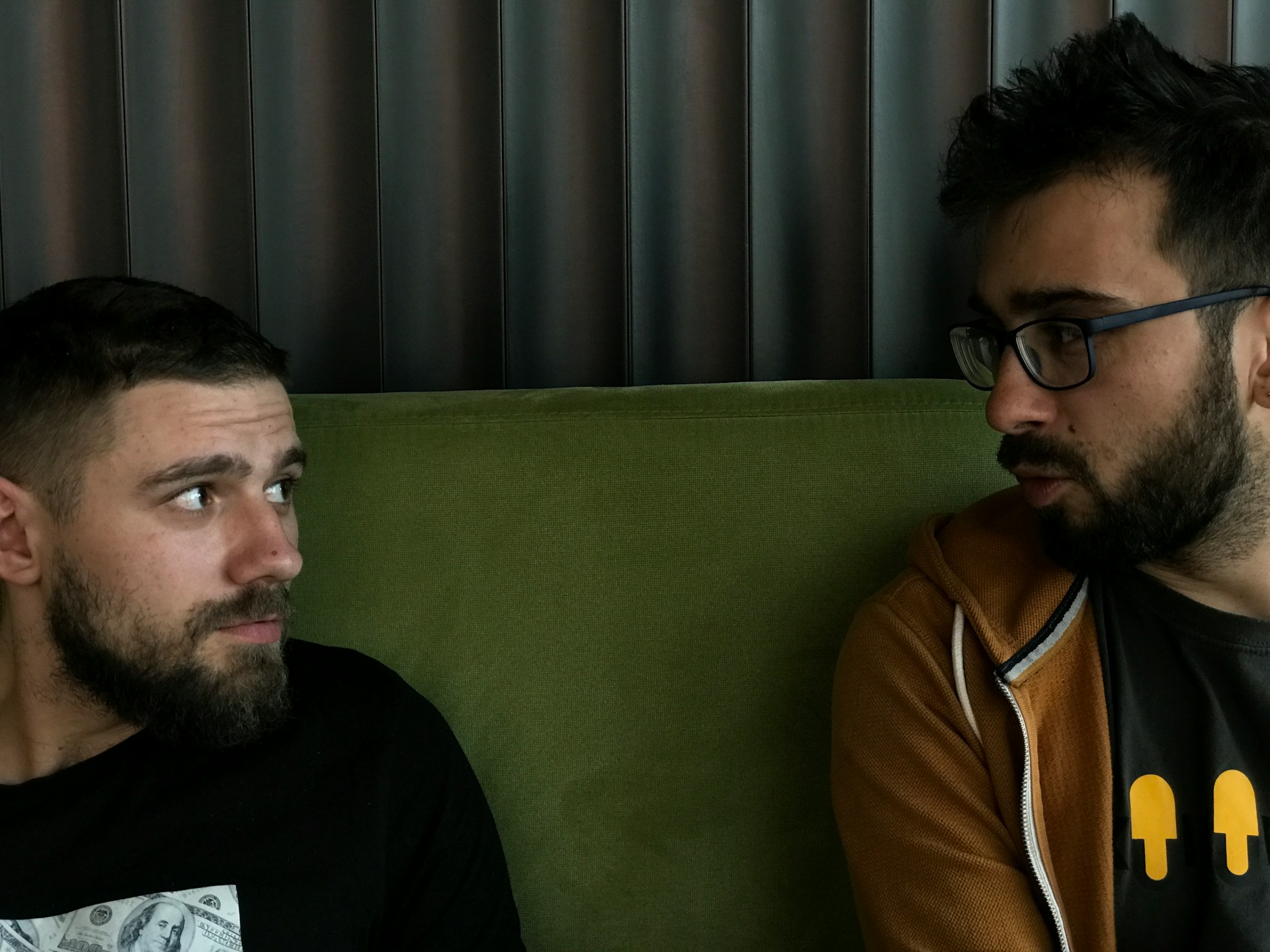
When emotions are consistently dismissed or met with anger, the nervous system learns that vulnerability is unsafe.
Suppressing your feelings may seem like the easiest solution in the moment, but over time it leads to resentment, emotional exhaustion, and a deep sense of disconnection from your partner.
How This Impacts ENM Dynamics
One of the foundational principles of ethical non-monogamy is honest, open, and fearless communication.
ENM does not survive on avoidance.
It thrives on transparency, emotional processing, and the willingness to sit with discomfort together.
When expressing your emotions repeatedly leads to defensiveness, anger, or blame, the emotional foundation of the relationship begins to erode.
Here’s how that erosion often shows up:
Emotional distance slowly develops, even if logistics and routines stay the same.
You may find yourself feeling alone next to someone you love deeply.
You may begin self-censoring, carefully editing your thoughts before speaking, or choosing silence over honesty to avoid conflict.
This goes directly against the core values of ENM, where openness and truth are meant to be celebrated, not punished.
Unspoken feelings don’t disappear.
They accumulate.
Over time, unresolved emotions harden into resentment, creating a cycle where every new conflict feels heavier than the last.
Small issues start triggering disproportionate reactions because they are stacked on top of unresolved pain.
If your partner consistently reacts with anger when you share your feelings, it’s essential to step back and reflect on why this pattern exists.
This reflection is not about blame.
It’s about clarity.
Ask yourself honestly:
Is this reaction rooted in your partner’s insecurities or a deep fear of not being enough?
Are they struggling to hold space for emotions while still honoring their desire for freedom and autonomy?
Is there an ongoing pattern of emotional dismissal that prevents you from feeling safe, seen, and respected?
Emotional safety is not optional in ENM.
Without it, honesty becomes dangerous, and connection becomes performative rather than real.
Recognizing these patterns is the first and most powerful step toward breaking them.
Awareness creates choice.
And choice is what allows ENM relationships to evolve into something healthier, more resilient, and emotionally sustainable.
Navigating the Challenge
Communicating in ENM can be complicated, but there are strategies to make conversations more productive and less triggering.
Here’s a detailed guide:
1. Use “I” Statements
Framing your emotions as personal experiences rather than accusations is one of the most powerful tools in ethical non-monogamy.
In ENM, emotions are not evidence of failure.
They are part of the relational process.
When you speak from an “I” perspective, you take ownership of your feelings instead of placing responsibility on your partner’s actions.
This helps reduce defensiveness and keeps the conversation rooted in connection rather than conflict.
For example, instead of saying:
“You make me feel jealous when you see other people,”
Which can easily be heard as blame or criticism, even if that’s not what you mean.
Try saying:
“I feel jealous when I see you with someone new, and I’d like to talk about it.”
This communicates vulnerability instead of accusation.
It signals that you’re not trying to control, limit, or punish your partner for having other connections.
You are simply inviting them into your internal experience.
“I” statements also remind both partners that emotions like jealousy, fear, or insecurity belong to the person feeling them, not to the partner being blamed for them.
This creates space for empathy rather than defensiveness.
It also models emotional honesty, which is a cornerstone of healthy ENM relationships.
When you show that you can speak openly without attacking, you make it safer for your partner to do the same.
Over time, this builds trust, emotional safety, and a shared understanding that feelings are welcome in the relationship.

2. Pick the Right Time
In emotionally complex relationships like ENM, timing truly matters.
Even the most thoughtful conversation can go wrong if it happens at the wrong moment.
Bringing up sensitive topics when either of you is tired, overstimulated, hungry, or stressed often triggers automatic defensive reactions.
In those moments, the nervous system is focused on survival, not connection.
Instead of listening, your partner may react with irritation, shutdown, or anger—not because they don’t care, but because they don’t have the capacity to engage safely.
Choosing the right time means waiting until both of you are regulated, present, and emotionally available.
This might look like having conversations after rest, during calm evenings, or when neither of you feels rushed or pressured.
Some ENM couples find it helpful to schedule regular emotional check-ins.
Check-ins create a predictable space where emotions are expected and welcome.
They reduce the feeling that difficult conversations are sudden or threatening.
When emotional processing becomes routine rather than reactive, it prevents emotional blow-ups and reduces the buildup of resentment.
Most importantly, picking the right time communicates respect—for your partner’s capacity and for your own emotional needs.
It sends the message that these conversations matter enough to be handled with care, not urgency.
3. Set Clear Boundaries
Ethical non-monogamy is built around freedom, but freedom cannot thrive without emotional safety.
When emotional safety is missing, freedom starts to feel chaotic rather than empowering.
Boundaries are what allow autonomy and intimacy to coexist instead of competing with each other.
Being clear about your boundaries means being honest about what you need to feel secure, grounded, and respected.
This is not about limiting your partner’s choices.
It’s about communicating how those choices impact your nervous system and emotional well-being.
When you state your boundaries, you are saying, “This is what helps me stay connected,” not, “This is what you are allowed to do.”
Equally important is inviting your partner to share their own boundaries, so the relationship becomes a two-way negotiation rather than a power struggle.
Boundaries are not rules meant to control behavior.
They are agreements designed to protect trust, respect, and emotional connection.
For example, needing text updates after dates with other partners can be a boundary that helps you feel safe and reassured.
This does not mean you are trying to monitor or restrict your partner.
It means you are asking for predictability and reassurance in a dynamic that can sometimes feel emotionally destabilizing.
Healthy boundaries are flexible, revisited over time, and discussed with curiosity rather than defensiveness.
When boundaries are respected, both partners feel more secure, which paradoxically allows for more freedom, not less.
4. Check in With Yourself
Not every intense emotion originates in the present moment.
Sometimes, what feels overwhelming is being amplified by past experiences, attachment wounds, or long-standing insecurities.
Before bringing difficult emotions to your partner, it’s important to pause and check in with yourself.
Ask yourself what exactly you are feeling beneath the surface.
Is it jealousy, fear of abandonment, sadness, or a need for reassurance?
Understanding your emotional layers helps prevent conversations from becoming reactive instead of intentional.
Reflecting on your triggers allows you to speak from clarity rather than emotional overload.
Tools like journaling, meditation, or grounding exercises can help you slow down and listen to yourself.
Talking with a trusted friend, mentor, or community member who understands ENM can also help you gain perspective.
When you take responsibility for understanding your emotions first, you show up to conversations more centered and less accusatory.
This makes it easier to communicate your needs in a way that invites connection instead of conflict.
Self-awareness does not mean handling everything alone.
It means knowing what you need before asking someone else to meet you there.

5. Consider Couples Support
If anger, defensiveness, or shutdown consistently appear when emotions are expressed, it may be time to seek external support.
This does not mean your relationship is failing.
It means your relationship is complex enough to deserve skilled guidance.
An ENM-aware therapist or sex-positive counselor understands the unique emotional landscapes of non-monogamous relationships.
They won’t pathologize jealousy or frame ENM as the problem.
Instead, they help unpack communication patterns, attachment dynamics, and unspoken fears.
Professional support can help you identify recurring cycles that keep leading to conflict.
It can teach both partners how to express emotions safely without triggering defensiveness or anger.
Therapy also provides tools to maintain emotional safety while still honoring autonomy, desire, and freedom.
Most importantly, it creates a neutral space where both partners can feel heard without being blamed.
Seeking therapy is not a sign of weakness or dependency.
It is a proactive commitment to growth, accountability, and long-term sustainability in your ENM relationship.
Recognizing Your Emotional Needs
In ethical non-monogamy, there is often a strong emphasis on freedom, autonomy, and respecting your partner’s choices.
While these values are important, they can sometimes overshadow your own emotional well-being.
It’s easy to become so focused on being “understanding,” “secure,” or “emotionally evolved” that you start minimizing your own feelings.
Many people in ENM internalize the belief that struggling emotionally means they are “doing ENM wrong.”
This belief can lead to self-silencing, emotional suppression, and deep internal conflict.
Your feelings are valid, regardless of how much theory you’ve read or how much emotional work you’ve done.
Feeling jealous, afraid, sad, or disconnected does not make you less ethical or less evolved.
Your emotional needs matter just as much as your partner’s freedom.
A relationship that prioritizes autonomy at the expense of emotional safety is not balanced.
Recognizing your emotional needs means allowing yourself to name what hurts, even when it feels inconvenient.
It means acknowledging when something in the dynamic leaves you feeling unseen, unimportant, or unsafe.
To gain clarity, it can help to ask yourself some honest and sometimes uncomfortable questions.
Do I feel heard and respected when I express my emotions, even if they are messy or inconvenient?
Do I feel emotionally safe, or do I find myself carefully choosing my words out of fear of backlash?
Am I afraid of negative consequences—such as anger, withdrawal, or blame—when I share my vulnerability?
Does my partner show a willingness to validate my feelings, even when they don’t fully understand them?
Or do they respond with anger, dismissal, or defensiveness that shuts the conversation down?
These questions are not meant to accuse or diagnose.
They are meant to help you assess whether your emotional needs have space to exist in the relationship.
Recognizing your emotional needs is the first step toward self-advocacy.
Asserting those needs does not mean demanding perfection or constant reassurance.
It means clearly communicating what you need to feel secure, connected, and respected.
Healthy ENM dynamics require both freedom and care.
Without emotional care, freedom becomes isolating rather than empowering.
When your needs are acknowledged and respected, ENM becomes a space for mutual growth, not self-erasure.

Final Thoughts
Feeling like you cannot express your feelings without triggering anger is difficult—but it does not mean your ENM relationship is failing.
ENM works best when both partners can feel safe, heard, and supported, even in messy or uncomfortable moments.
Your emotions are valid, your voice deserves to be heard, and honesty should never lead to punishment or anger.
Anger is natural, but it should not be the default response to your vulnerability.
At its core, ENM is about exploring love, connection, and personal growth.
It’s about seeing how deeply you can connect with yourself and your partner, even through fear, jealousy, and vulnerability.
When expressed safely and received thoughtfully, emotions like jealousy, fear, or desire for intimacy can become tools for growth, rather than sources of conflict.
FAQ
Is it normal for ENM to feel emotionally harder than monogamy at times?
Yes.
Ethical non-monogamy often requires more emotional processing, self-reflection, and communication than monogamy, especially when multiple attachments are involved.
Feeling challenged does not mean ENM is failing—it means you are engaging with it honestly.
Can a partner be supportive of ENM in theory but struggle emotionally in practice?
Absolutely.
Some people intellectually agree with non-monogamy but have unresolved attachment wounds or emotional skills gaps that surface when emotions become real.
This mismatch can create tension even when values align.
How do I know if my partner’s anger is a temporary reaction or a deeper issue?
Occasional emotional reactions happen in all relationships.
When anger becomes predictable, shuts down conversations, or makes you afraid to speak, it points to a deeper pattern that needs attention.
Is it possible that ENM is being used to avoid emotional accountability?
Yes.
In some cases, ENM language around “freedom” or “autonomy” can be used to deflect emotional responsibility or avoid uncomfortable conversations.
Healthy ENM still requires care, repair, and responsiveness.
What if I’m emotionally open but my partner lacks the skills to meet me there?
Emotional compatibility includes capacity, not just intention.
If one partner consistently does the emotional labor while the other reacts with anger or avoidance, the imbalance will eventually create strain.
Should I wait for my partner to “catch up” emotionally?
Growth takes time, but waiting indefinitely at the cost of your own well-being is not sustainable.
Progress should be visible, mutual, and supported by effort—not just promises.
Can ENM still work if we have very different emotional needs?
It depends.
Differences can be negotiated, but only if both partners are willing to adapt, communicate, and respect each other’s limits.
Without that willingness, incompatibility may be the issue rather than ENM itself.
When is it time to reconsider the relationship, not just the communication style?
When expressing your feelings repeatedly leads to fear, self-silencing, or emotional exhaustion, it may be time to reassess the relationship as a whole.
No relationship style justifies ongoing emotional harm.

Anna is an anthropologist with a passion for Ethical Non-Monogamy (ENM) and gender and sexuality studies. Through ENM Living, she shares research-based insights and informative content to help others explore and navigate alternative relationship models. Anna is dedicated to creating an inclusive space that celebrates love in all its forms and supports those navigating the complexities of ENM.


